
Knowledge 1 December 2025
Capsules vs Tablets vs Softgels vs Powders: Which Format Fits Your Supplement?
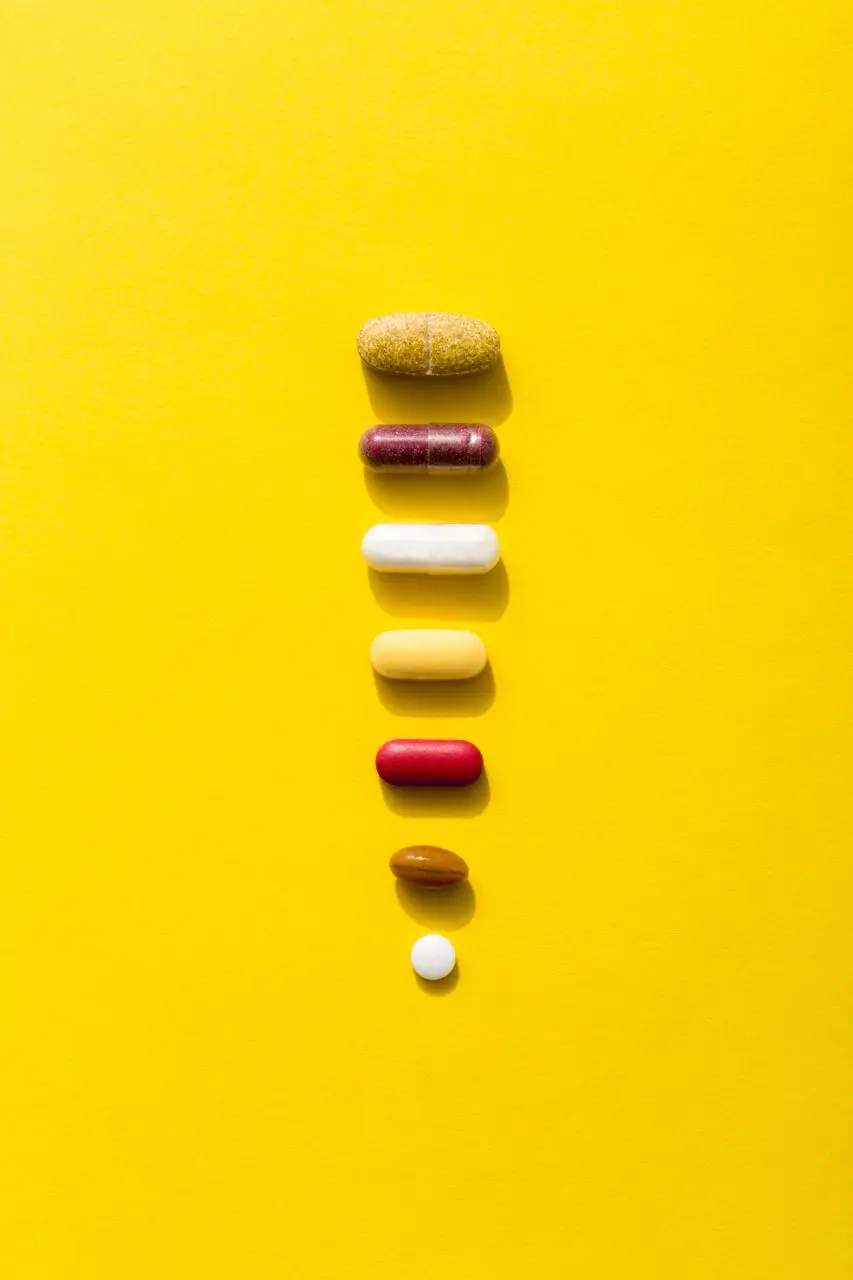
Capsules, tablets and softgels at PharmaEurope start from 100 units as white label (our ready-made formula and pack, your label) and from 500 bottles under your own label, or 500 pcs for stock softgels. Powders and sachets start from 300 kg of finished blend, effervescent tablets carry a low minimum order quoted per tube of 20 tablets, syrups start from 100 L and oils with vitamins from 20 L. A brand on a ready-made formula is in production from 2 weeks; a formula of your own takes from 4 weeks. Every format is made at our plant in the European Union, which is ISO 22000, GMP and HACCP certified and FDA registered, with a Certificate of Analysis for every batch and a 24-month standard shelf life.
In practice the ingredient picks the format before the brand does. An oil goes into a softgel, a serving of several grams goes into a powder, a sachet or an effervescent tablet, a compressible mineral goes into a tablet, and a light botanical extract goes into a capsule. The table below puts all seven formats we make side by side.
Supplement formats compared: minimum, time, what fits, what goes wrong
The fastest way to compare formats is by the four things a buyer has to commit to: the minimum order, the production time, the ingredients the format carries well, and the failure the factory watches for on that line.
| Format | Minimum order | Production time | What fits | What goes wrong |
|---|---|---|---|---|
| Capsules | White label from 100 units; your own label from 500 bottles | From 2 weeks; own formula from 4 weeks | Botanical extracts, blends that will not compress, vegetarian products in an HPMC shell | A light, bulky extract needs a larger capsule or two capsules per serving; hygroscopic powders react to the shell and the pack |
| Tablets | White label from 100 units; your own label from 500 bottles | From 2 weeks; own formula from 4 weeks | Minerals, multivitamin complexes, any blend that compresses into a stable tablet | Some actives will not hold together under pressure; a high dose makes a large tablet; the excipient balance decides whether it breaks down |
| Softgels | White label from 100 units; stock softgel from 500 pcs; own softgel formula from 1,000,000 capsules | From 2 weeks; own softgel formula quoted per project | Oil fills: fish oil, vitamin D3 in oil, flaxseed oil, evening primrose oil, lecithin | Fill and gelatine shell interact (leaking, sticking, deforming); oils oxidise; heat deforms the capsule |
| Powders | From 300 kg of finished blend | From 2 weeks; own formula from 4 weeks | Multi-gram servings: whey and plant protein, collagen, creatine monohydrate, pre-workout, mass gainer | Particles of different size separate in the jar; fine powder clumps; a new raw material supplier changes how the blend runs |
| Sachets | From 300 kg of finished blend | From 2 weeks; own formula from 4 weeks | Single servings of 4 to 12 g: collagen, electrolytes, magnesium, fibre | Bulk density decides the sachet height; flavoured powder takes up moisture; cost per serving is higher than a jar |
| Effervescent tablets | Low minimum order, quoted per tube count (20 tablets per tube) | From 2 weeks; own formula from 4 weeks | A high dose taken as a drink, such as vitamin C 1000 mg | Moisture starts the reaction early; process tolerances are narrow; a flavour has to be re-tested in the tablet |
| Liquids | Syrups from 100 L; oils with vitamins from 20 L | From 2 weeks; own formula from 4 weeks | Flavoured syrups and concentrated vitamin oils | The dosing instruction has to match the dosing device; the most oxidation-sensitive component sets the date |
What is the minimum order for each supplement format?
The minimum is counted in a different unit for each format: bottles for capsules and tablets, pcs for softgels, kilograms for powders and sachets, tubes for effervescent tablets and litres for liquids. That is not a pricing trick. A capsule run is filled bottle by bottle, a powder is blended as one batch whatever the jar size, and a syrup batch becomes 500 or 1,000 bottles depending on the fill volume you choose.
When two formats look close for your formula, the unit can settle it. A brand that wants to test a market with a small first run usually finds it easier in capsules, tablets or softgels from 100 units than in a powder that starts at 300 kg. The full breakdown is on our minimum order quantity page.
Capsules or tablets for a powder formula?
Choose a tablet when the blend compresses into a stable tablet and the dose fits one comfortable size; choose a capsule when it does not. Both start from 100 units as white label and from 500 bottles under your own label, so the minimum rarely decides between them. The powder does.
- Compressibility. Some actives hold together under pressure and some do not, whatever the dose. Where a blend will not, the answer is a capsule rather than a heavier binder system.
- Bulk density. A fluffy botanical extract needs more volume than a dense mineral salt at the same milligram dose, so the capsule size is known only once the blend exists.
- Dose. A high-milligram active such as glucosamine makes a physically large tablet. Two smaller tablets per serving are often a better product than one that is unpleasant to swallow.
- Positioning. A vegetarian product needs an HPMC capsule shell; a gelatine shell is animal-derived. Tablets can be film-coated with HPMC, which also hides the taste and colour of the blend.
Tablets are compressed on an IMA PREXIMA 300 press and both formats are counted into bottles on a Cremer CF 1220 line, so the choice is about the formula rather than the equipment.
When does a supplement need to be a softgel?
A supplement needs a softgel when the active is an oil: fish oil, vitamin D3 in oil, flaxseed oil, evening primrose oil or lecithin cannot be compressed and do not sit well in a hard capsule. The softgel seals the liquid in a single-piece gelatine shell and keeps air away from it, which for fish oil also keeps the smell in.
Two things follow from the shell. First, the fill and the shell react over time, so a custom oil is tested for compatibility on a trial batch before production. Second, gelatine is animal-derived, so a brand that needs a vegetarian claim moves the product to an HPMC capsule or a powder. The ready-made softgel range, including vitamin D3 at 2000, 4000 and 5000 IU and omega-3 declared by EPA and DHA content, is on the softgel manufacturing page and the omega-3 page.
Powder, sachet or effervescent tablet for a serving of several grams?
A jar of powder is the economical choice for a multi-gram serving, a sachet carries one exact serving of 4 to 12 g, and an effervescent tablet delivers a high dose as a drink in a tube of 20 tablets. Powders and sachets share the same 300 kg minimum of finished blend; effervescent tablets are quoted per tube count.
- Jar or zip-lock bag of powder when the customer is happy to use a scoop: protein, creatine, collagen, pre-workout. Bulk density decides the jar size.
- Sachet when the dose must be exact without a scoop, when the product travels, or when it is sold as a 30-day course. The three-layer laminate of paper, aluminium foil and sealing film is the moisture barrier. It costs more per serving than a jar.
- Effervescent tablet when the dose is uncomfortable to swallow but easy to drink. Each tablet weighs about 4 g on a sorbitol base, and the tube with a desiccant cap is part of the formulation, not a style choice.
Creatine sits in the first group, and its particle size is the whole quality argument: see creatine supplement manufacturing. Electrolytes are one of the typical sachet servings; formulas and formats are on the electrolyte and hydration page.
When are liquid supplements the right format?
Liquids suit a flavoured syrup or a concentrated vitamin oil, and they are quoted by the litre: syrups from 100 L, oils with vitamins from 20 L. A 100 L syrup batch becomes 1,000 bottles of 100 ml or 500 bottles of 200 ml, so tell us the fill volume and the minimum is converted into your units.
The trap in this format is on the label. The dosing instruction and the daily maximum have to match the dosing device in the pack, and a mismatch is a common reason a label gets rejected. Each flavour is a separate batch with its own minimum.
Which format for which ingredient?
Most ingredients have one natural format and one or two workable alternatives. These are the formats our ready-made formulas already use for common ingredients.
| Ingredient | Format we use | Why | Ready-made examples |
|---|---|---|---|
| Omega-3 fish oil | Softgel | An oil that oxidises and smells; the sealed shell keeps air out | Omega-3 declared as EPA/DHA, Super Omega 3-6-9 |
| Vitamin D3 | Softgel | A fat-soluble vitamin in an oil fill | 2000, 4000 and 5000 IU |
| Magnesium | Tablet, capsule or effervescent tablet | A dense mineral salt that compresses well; the dose sets the count per serving | Magnesium + vitamin B6 in all three formats |
| Vitamin C | Effervescent tablet or tablet | 1000 mg is easy to drink and large to swallow | Vitamin C 1000 mg effervescent; vitamin C with bioflavonoids and rosehip tablet |
| Botanical extracts | Capsule | Light, bulky powders that do not always compress | Ashwagandha root, maca root, Korean ginseng |
| Protein, collagen, creatine | Powder or sachet | Servings of several grams no capsule can carry | Whey and plant protein, creatine monohydrate |
More than 500 ready-made formulas are in production across these formats. The ready-made formulas page lists them together, and the ingredients hub sorts them by category.
What goes wrong when the format is chosen before the formula
The usual mistake is to fix the format from a competitor's shelf and then try to fit the formula into it. On the line, that shows up in predictable ways:
- a dose promised as one capsule turns into two, because the extract is lighter than expected;
- a tablet blend that will not compress is pushed with more binder until it stops breaking down properly;
- a vegetarian claim is planned on a gelatine softgel and the product has to change format late;
- a flavour proven in a drink powder is moved into an effervescent tablet without re-testing;
- a hygroscopic ingredient is put in a zip-lock bag instead of an induction-sealed bottle or a blister.
Each of these is cheaper to catch in the brief than at the trial batch. The shelf life follows the same logic: 24 months is the standard, and the shortest-lived ingredient and the pack decide the date printed on the product.
What to send so the format can be checked
Four lines are enough for the PharmaEurope team to confirm a format and quote it, and we reply within 24 hours, Monday to Friday:
- the active ingredients and the dose per serving;
- the quantity for the first run, in any unit;
- the market you will sell in;
- any claim you need on the pack, such as vegetarian or vegan.
Questions buyers ask about supplement formats
Which supplement format can I start with the smallest order?
Capsules, tablets and softgels on a ready-made formula start from 100 units as white label at PharmaEurope. Under your own label the standard run is 500 bottles, or 500 pcs for stock softgels. Effervescent tablets carry a low minimum order quoted per tube count, so send the number of tubes you need.
How long does production take for each format?
PharmaEurope produces your own brand on a ready-made formula from 2 weeks, in every format: capsules, tablets, softgels, powders, sachets, effervescent tablets and liquids. A formula developed for your brand takes from 4 weeks, because the blend, the shell or the flavour has to be proved on a trial batch before the production run.
Can I use one formula in two formats?
Sometimes. Magnesium with vitamin B6 is already made by PharmaEurope as a tablet, a capsule and an effervescent tablet. Each format still needs its own excipients, pack and specification, and an oil formula only works as a softgel or a liquid. Send the composition and the team confirms which formats it can run in.
Is a softgel suitable for a vegetarian product?
A softgel shell is gelatine, which is animal-derived, so the vegetarian route is a different format. PharmaEurope moves such products to an HPMC capsule, a plant-derived shell used in most of our ready-made capsule formulas, or to a powder. A vegan claim also depends on every ingredient, so the full composition is confirmed in writing first.
Why are powder minimums in kilograms and capsule minimums in bottles?
A powder is blended as one batch, and the same 300 kg of finished blend fills very different numbers of jars or sachets depending on the serving and the pack size. Capsules are counted into bottles, so PharmaEurope quotes them in bottles. Tell us the fill you plan and the team converts the minimum into your units.
Does the format change the shelf life?
The standard shelf life at PharmaEurope is 24 months in every format, confirmed in the specification. The real date follows the shortest-lived ingredient and the pack: an oil depends on its antioxidant and on light protection, an effervescent tablet on its desiccant tube, a flavoured powder on a moisture barrier. The printed date is the one the stability data supports.
What documents come with each batch?
PharmaEurope issues a Certificate of Analysis for every batch, together with the product specification, raw material documentation, an allergen statement and a shelf-life statement. The plant is ISO 22000, GMP and HACCP certified and FDA registered, which is a registration, not an approval. Copies of the certificates are sent to clients on request.
What if I am not sure which format my product needs?
Send the active, the dose per serving, the first-run quantity and the market. PharmaEurope replies within 24 hours, Monday to Friday, with the format the ingredient suits, the pack, the minimum in that format's unit and the production time. If two formats work, the reply sets out what each one changes in cost and timing.
Sources
- PharmaEurope format pages: capsules, tablets, softgels, powders, sachets, effervescent tablets, liquids.
- PharmaEurope minimum order quantities by format and certifications.
- European Commission, food supplements framework.
Figures checked against our published pages on 26 October 2026.
Thinking about your own product? Tell us the format, the active and its dose, and how many units you need for the first run. Ready-made formulas start from 100 units, and we reply within 24 hours, Monday to Friday.
Written by the PharmaEurope manufacturing team at the ISO 22000-certified plant in the European Union. Last reviewed 26 October 2026.
Where this is made
Request a quoteReady-made formulas from 100 units. We reply within 24 hours, Monday to Friday.
Read next
 Private label vitamin D3 + K2 and vegan vitamin D3PharmaEurope makes private label vitamin D3 + K2 in softgels, tablets and effervescent tubes of 20, and vegan vitamin D3 from algae, at our EU plant. White label starts from 100 units, standard own-label runs from 500 bottles (500 pcs for stock softgels), your own brand on a ready-made formula is in production from 2 […]27 October 2026
 Why vitamin D is a strong first product for your supplement brandVitamin D is a strong first product for a new supplement brand because the ingredient is well known to buyers, the product is taken every day and the EU allows seven authorised health claims for it. PharmaEurope manufactures private label vitamin D in its certified EU plant: white label on a ready-made formula from 100 […]27 October 2026
 What vitamin D does and what an EU label may sayIn the EU, what vitamin D does may be stated on a supplement label only in the seven authorised health claims of Regulation (EU) No 432/2012, for example "Vitamin D contributes to the maintenance of normal bones", and only when a daily serving supplies at least 15 % of the 5 µg NRV, which is […]27 October 2026