
Private label supplement manufacturing for the Chinese market
Manufactured in the European Union.
欧盟工厂 | 保健品OEM/ODM贴牌代工 | 小批量100瓶起订
Most new brands reach Chinese shoppers through cross-border e-commerce, on Tmall Global and JD Worldwide, where an EU-made product sells on its origin and its documents. PharmaEurope manufactures at an ISO 22000-certified plant in the European Union: from 100 units on ready-made formulas, 500 bottles as the standard run, with a Certificate of Analysis for every batch.
In short: products on China’s cross-border positive list sell without a Chinese product registration. General trade into Chinese retail needs a SAMR registration or filing, applied for by the overseas manufacturer through its representative office or an authorised agent in China.
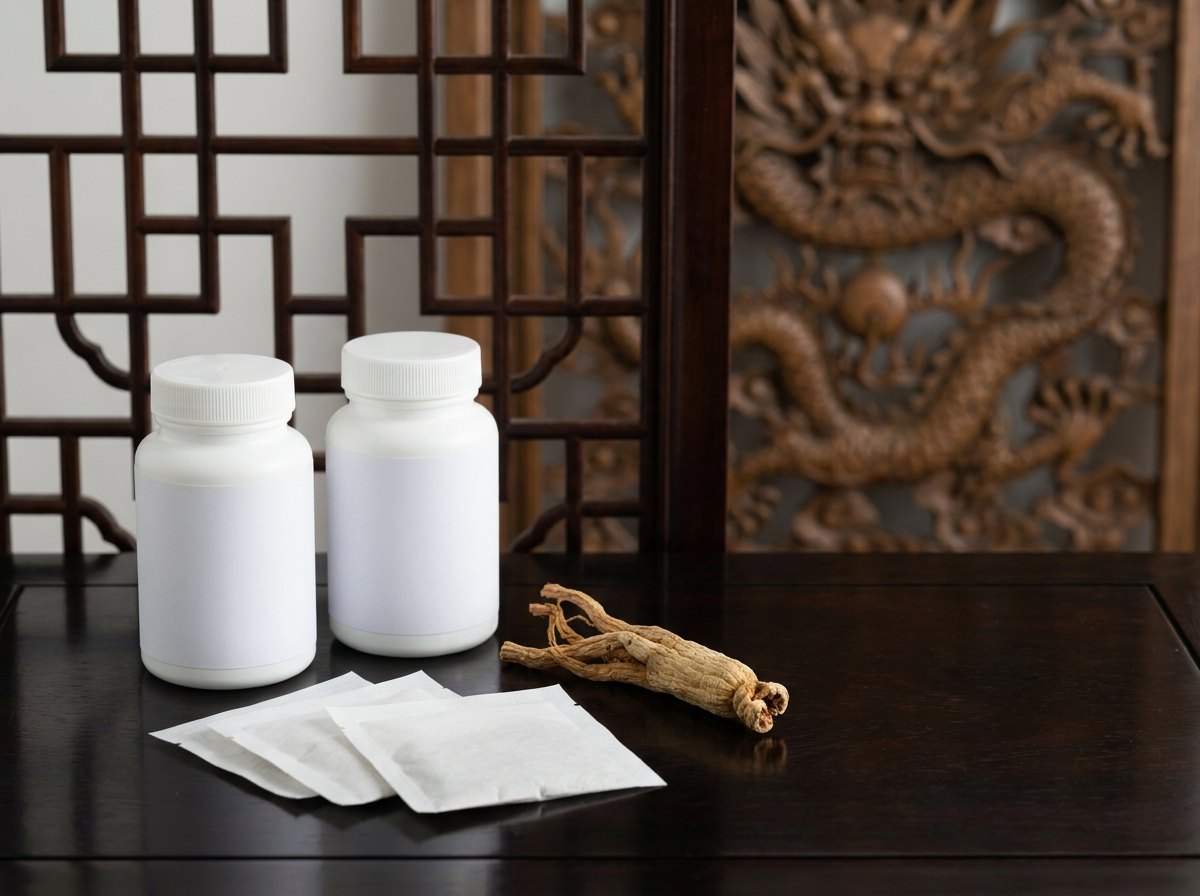
MOQ, production time and documents for the Chinese market
The figures a cross-border seller asks for before the first order.
| Item | Detail |
|---|---|
| Standard run | 500 bottles of capsules or tablets per product; 300 kg of finished blend for powders |
| First run | From 100 units on ready-made formulas |
| Production | from 2 weeks |
| With every batch | Specification, Certificate of Analysis, site certificates: ISO 22000, GMP and HACCP; US FDA facility registration |
| Route for a new brand | Cross-border e-commerce (CBEC) for products on China’s positive list, which covers about 1,476 tariff codes in its 2025 version |
| Shopper limits | CNY 5,000 per order and CNY 26,000 per year for each shopper buying cross-border |
| Taxes | Cross-border: about 9.1% combined within the shopper limits; general trade: 12% duty plus 13% VAT |
| Plant registration in China | Not required for cross-border e-commerce, where goods enter as imports for personal use; overseas plant registration with GACC applies to general trade |
Which import route fits a first run into China?
For a brand starting small, cross-border e-commerce is the realistic door: the goods wait in a bonded warehouse in China and ship to each shopper as they order. General trade makes sense once the brand has a Chinese company and a product that has proved it sells.
Two routes, two timelines
Cross-border e-commerce needs no Chinese product registration for products on the positive list; after production, the time to market depends on onboarding with the platform and on bonded-warehouse logistics. General trade needs a SAMR registration or filing, applied for by the overseas manufacturer through its representative office or an authorised agent in China, and takes far longer.
Sources and dates are listed below; the platform or your importer confirms the current rules.
How do EU-made supplements reach Chinese shoppers?
1. Formula check
We check your formula against the current CBEC positive list with you before production.
2. Production
From 2 weeks at our plant. The batch is released with its Certificate of Analysis.
3. Export from the EU
FCA or DAP recommended. The invoice carries no EU VAT once the export is proven.
4. Bonded warehouse
The goods wait in a bonded zone in China and ship to each shopper as they order.
5. On sale
Through your store on a cross-border platform, run by you or by your partner.
Questions about manufacturing supplements for the Chinese market
Do we need a Chinese “blue hat” registration?
Not for cross-border e-commerce: products on the CBEC positive list are sold without it. General trade into Chinese retail needs a SAMR registration or filing, applied for by the overseas manufacturer through its representative office or an authorised agent in China.
Does the plant need to be registered in China?
Not for cross-border e-commerce: shipments enter as goods for personal use and are currently exempt from overseas plant registration, an exemption that may be revised. Registration applies to general trade: under GACC Decree 280, in force since 1 June 2026, food supplements are among the categories whose overseas plants register on the recommendation of the exporting country’s authority.
Which categories sell best cross-border?
Fish oil, probiotics, vitamins and collagen lead demand among imported supplements. Our ready-made catalogue covers all four.
Can the label or the listing claim health benefits?
Not as a medical claim. Wording such as cure, treat or prevent is banned for supplements in China, in general trade and cross-border alike, and platforms block listings that use it. We keep the label within EU rules, which exclude such claims already.
What does it cost to land the goods?
We quote production; taxes are paid in China. Cross-border e-commerce carries a combined rate of about 9.1% within the shopper limits; general trade carries 12% duty plus 13% VAT.
Which formats can you make for cross-border sale into China?
Capsules, tablets, softgels, effervescent tablets, powders, sachets, sports nutrition, syrups and vitamin oils, all made at our plant. The full range is on the formats page.
Can you manufacture our own formula?
Yes. A formula developed from your brief starts from 500 bottles per product for capsules and tablets and 300 kg of finished blend for powders. It is turned into a sample first, and nothing is produced before you approve it. For cross-border e-commerce the product must fit the CBEC positive list, which your platform partner confirms for your formula.
Which ready-made formulas start from 100 units?
Ready-made formulas in capsules, tablets and softgels start from 100 units in stock packaging. Effervescent tablets have a low minimum quoted per tube count, and powders start from 300 kg of finished blend. The catalogue is on the ready-made formulas page.
Does the production time include shipping to China?
No. Production takes from 2 weeks. Transit to China and clearance come on top of that.
What documents come with every batch?
A specification, the Certificate of Analysis for the batch and copies of the site certificates: ISO 22000, GMP and HACCP.
Can we get samples before ordering?
Yes. Samples of existing products are sent to companies that are seriously considering an order, so you can see the product, the pack and the label before the first batch.
Sources
- GACC Decree 280 on the registration of overseas food manufacturers, published 14 October 2025, in force from 1 June 2026; GACC Announcement No. 27 of 2026 (18 March 2026) with the category catalogue.
- China’s cross-border e-commerce retail import positive list, 2025 version.
- Cross-border retail import tax: 0% duty, VAT and consumption tax at 70% within the shopper limits of CNY 5,000 per order and CNY 26,000 per year.
- China customs tariff, HS 2106909090: MFN duty 12%, import VAT 13%, consumption tax 0%.
Checked on 23 September 2026. Rules and rates change: your platform, importer or customs broker confirms them for your product.
Tell us your formula and your market
Tell us the category, the serving size and how many units you need for the first run, and we will come back with the blend, the flavour options and a price for that quantity.
- Message us on WhatsApp